-
Description
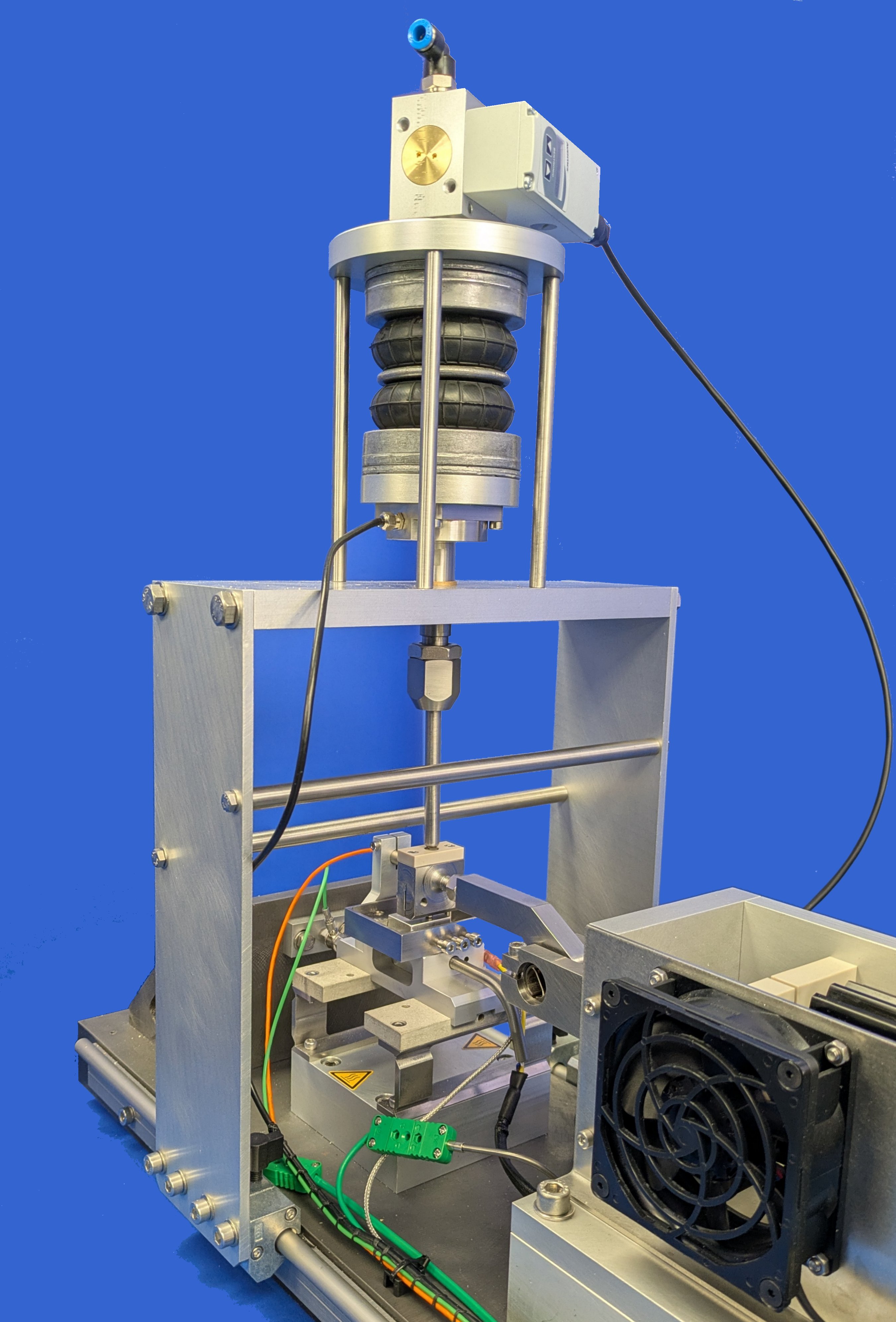
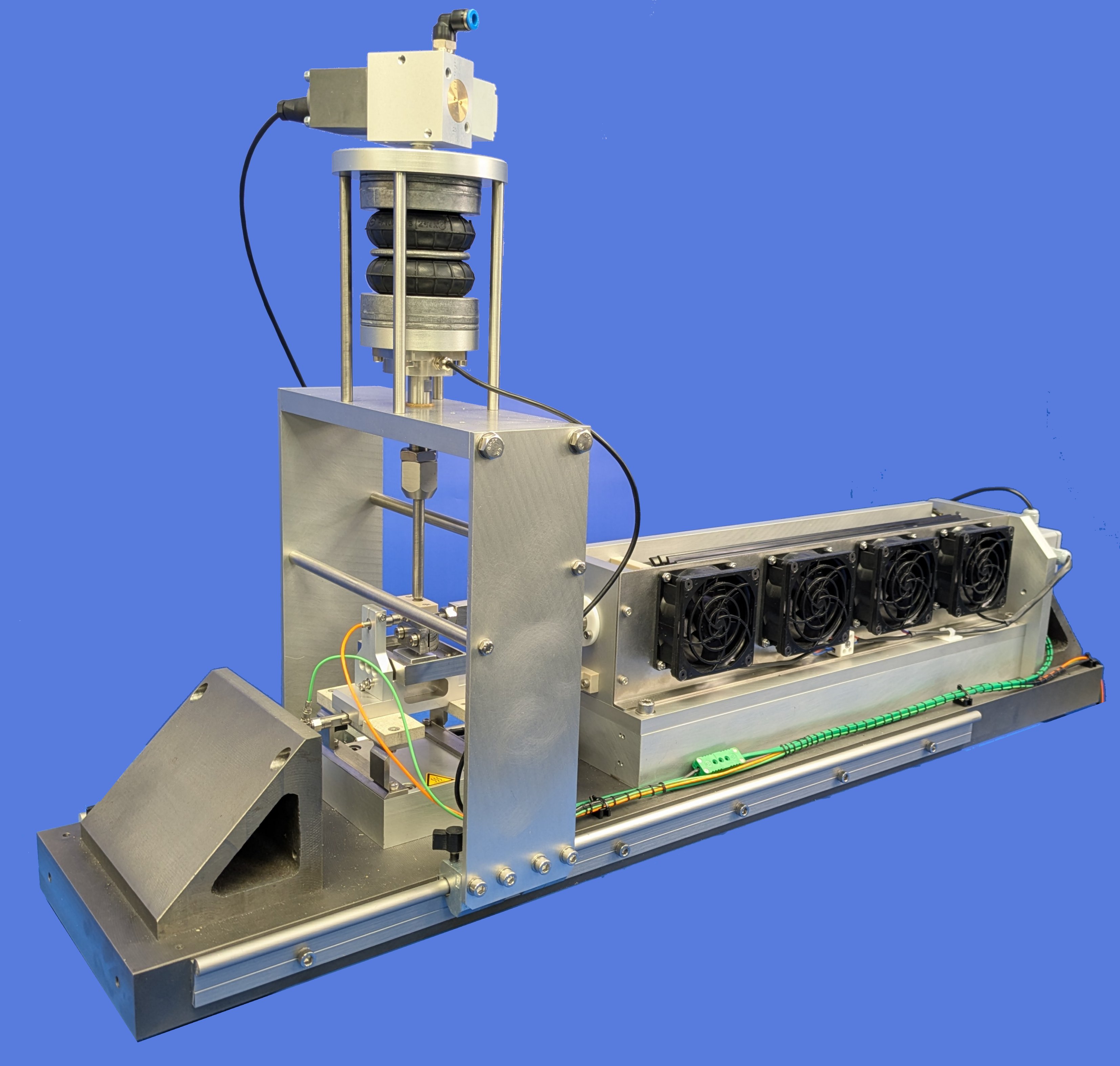
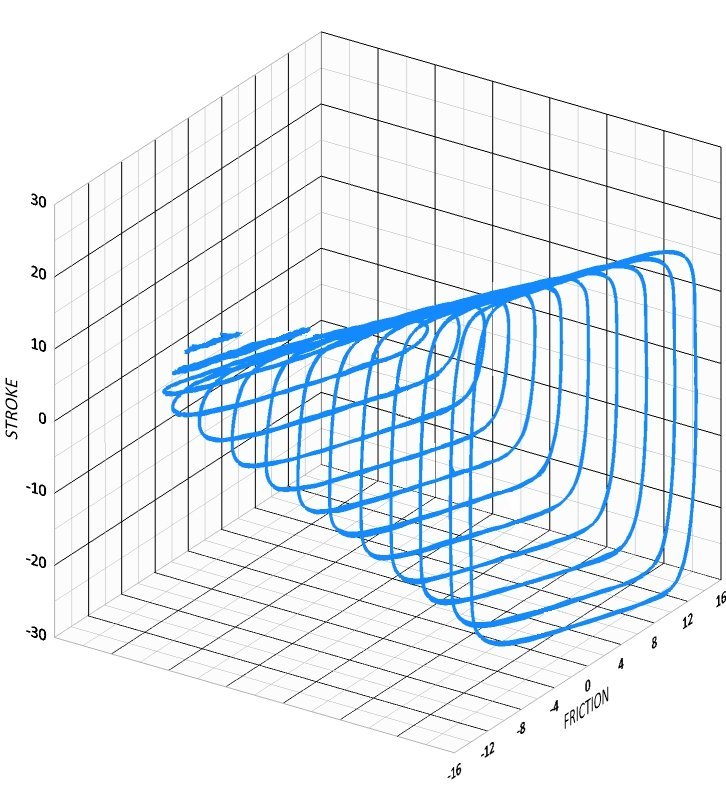
The TE 44 Piezo Fretting Rig incorporates a piezo actuator driven by a high frequency analogue controller, which derives its set points via a 16 bit control and data acquisition card from a standard PC, running COMPEND 2020 software. Real time adaptive control features provided within the software allows high precision control of the actuator when working against highly non-linear loads. Sine, square and triangular waveforms may be programmed and at oscillating frequencies up to 100 Hz.
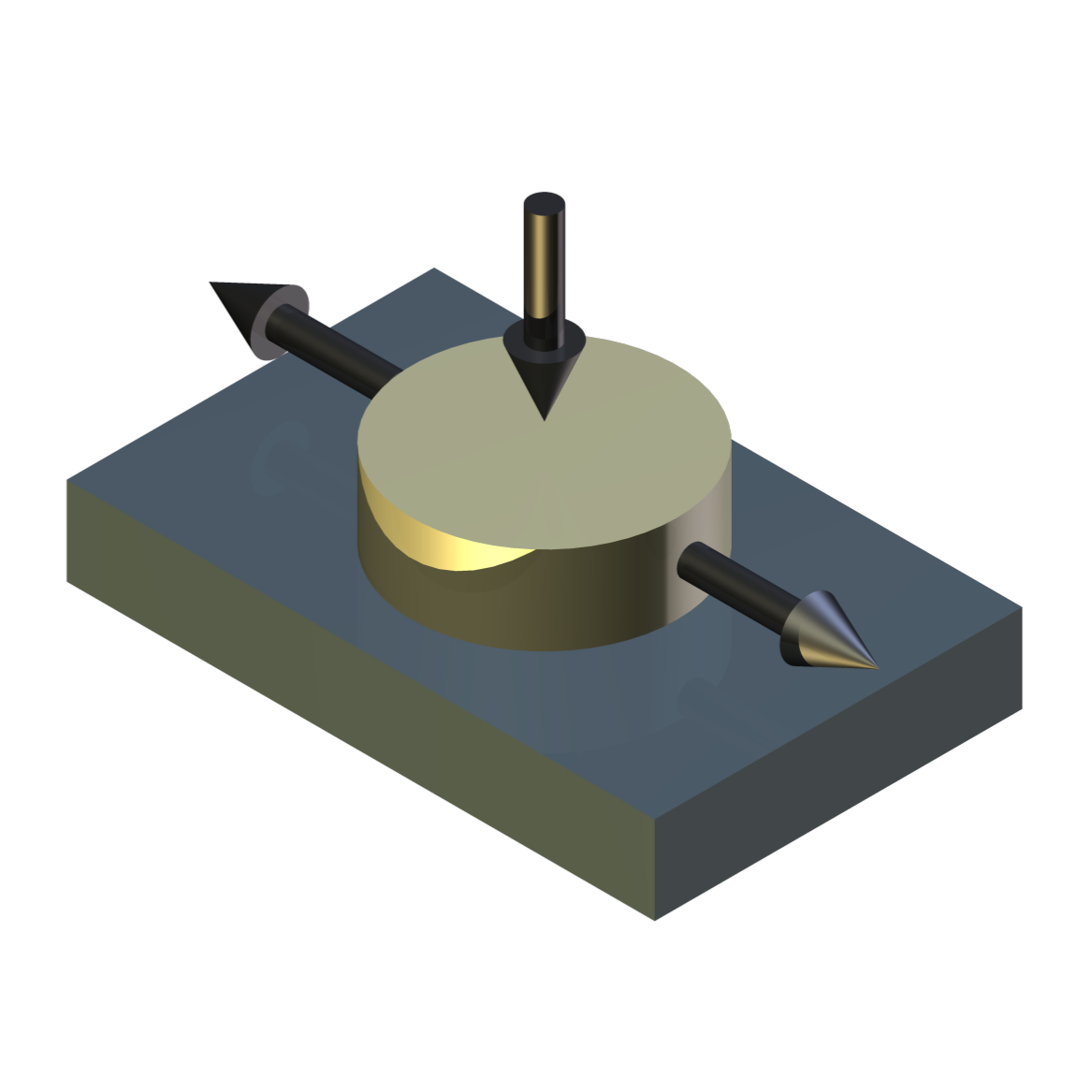
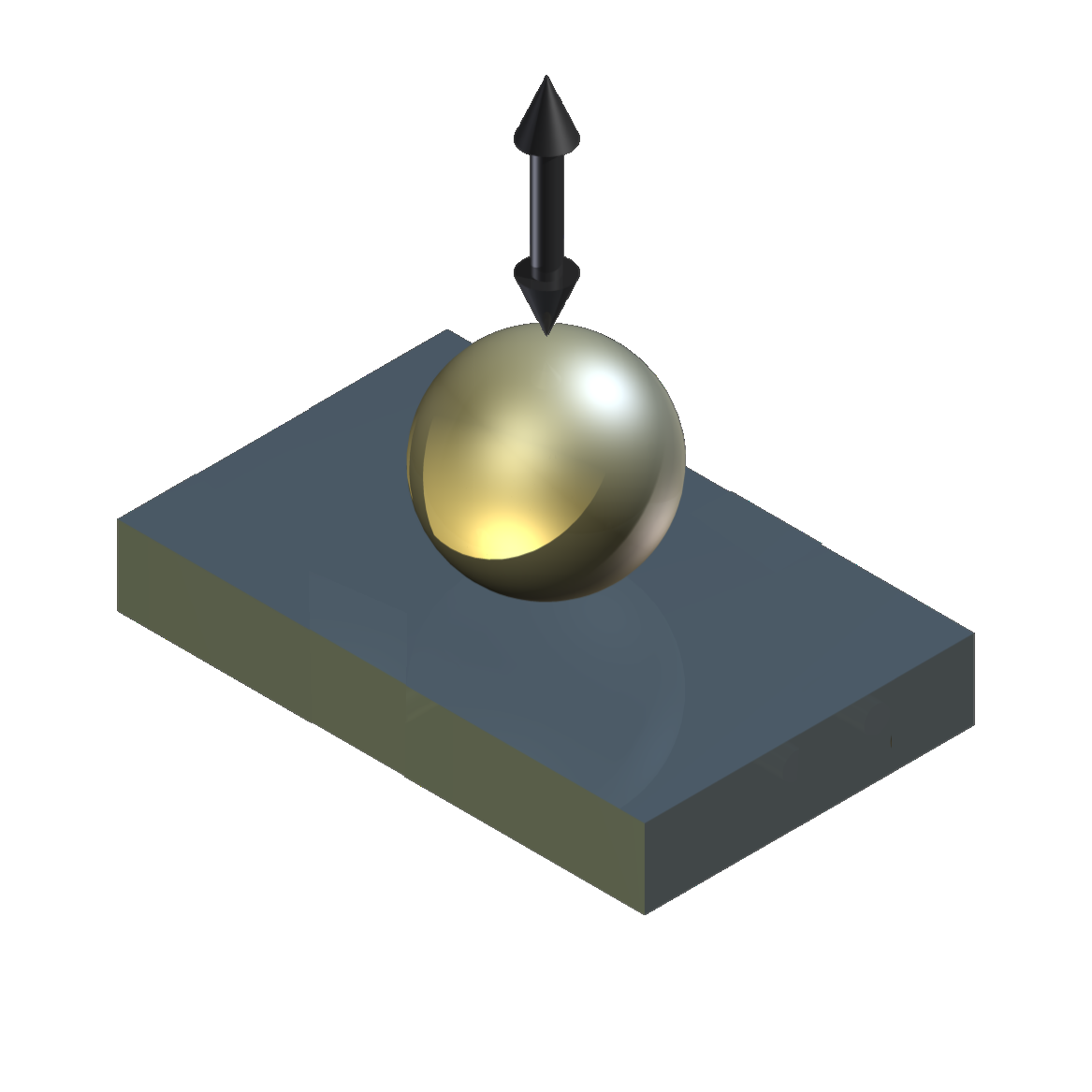
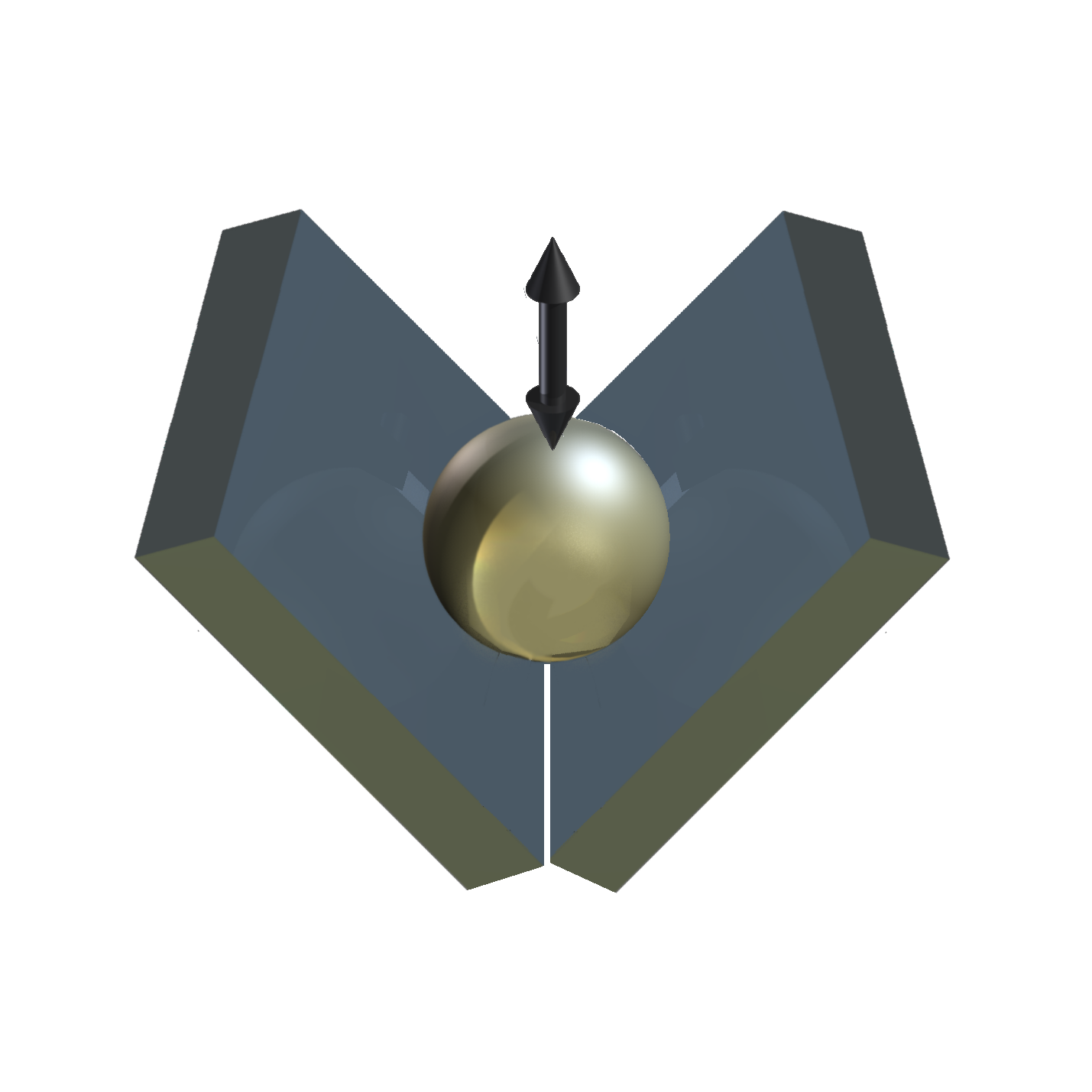
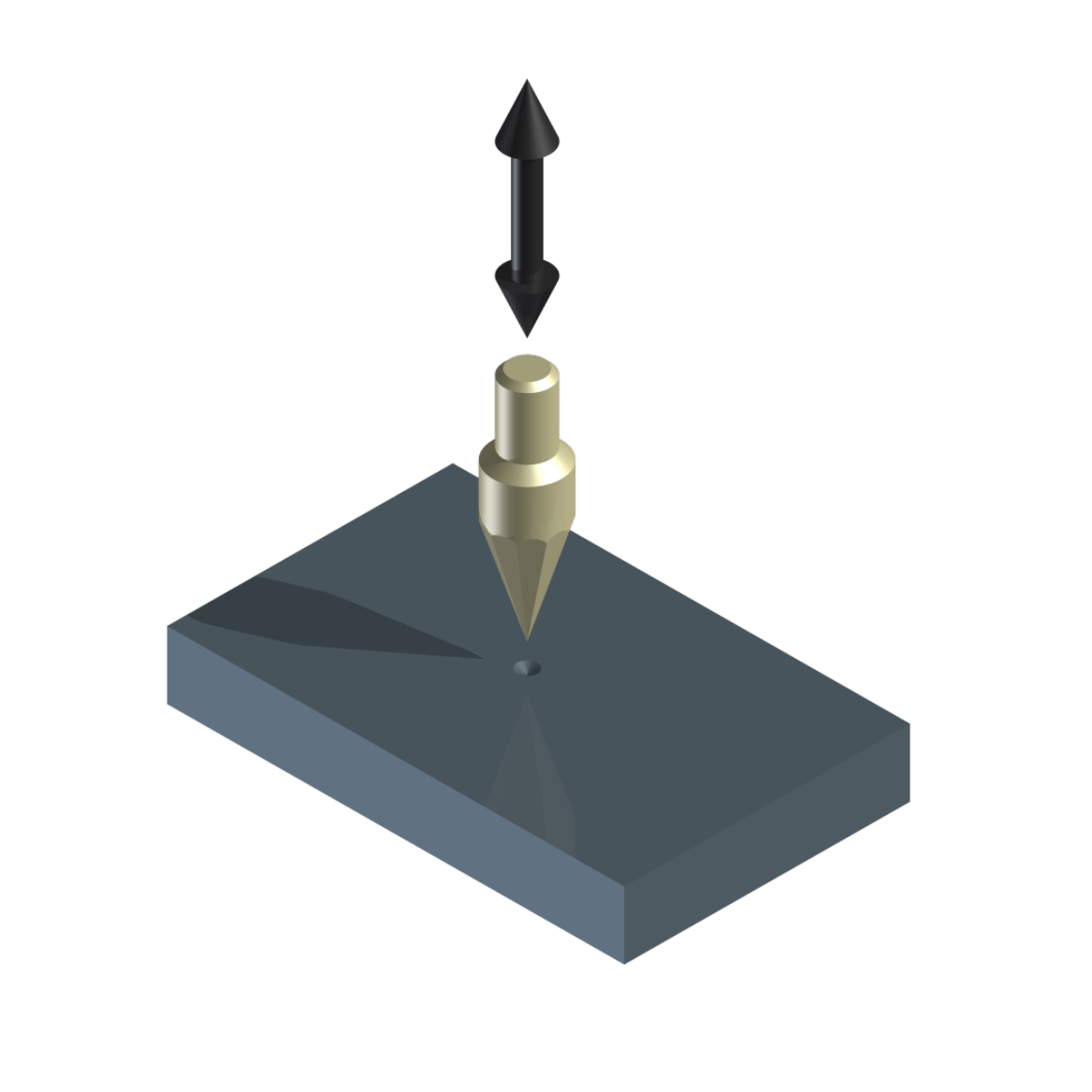
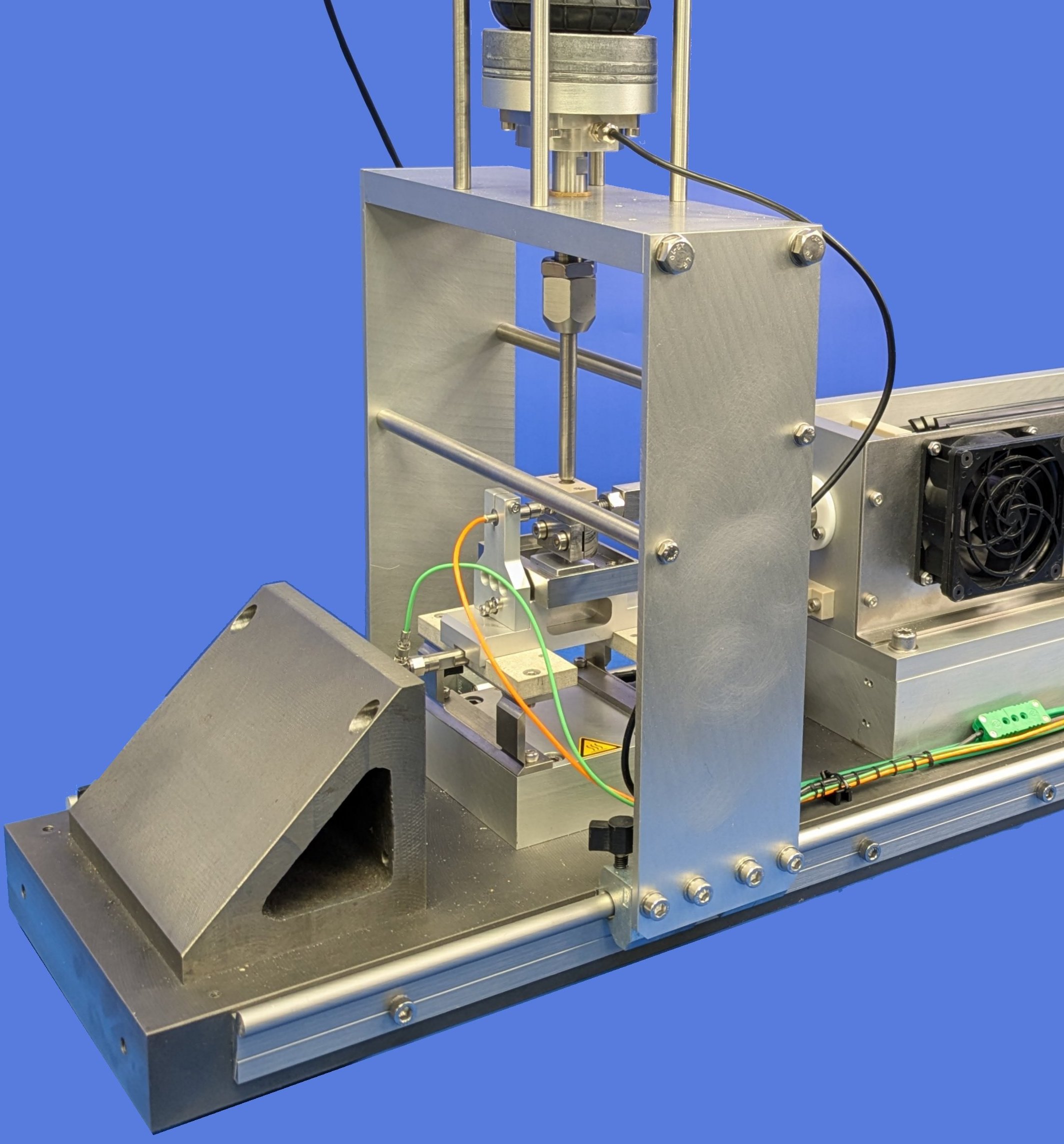
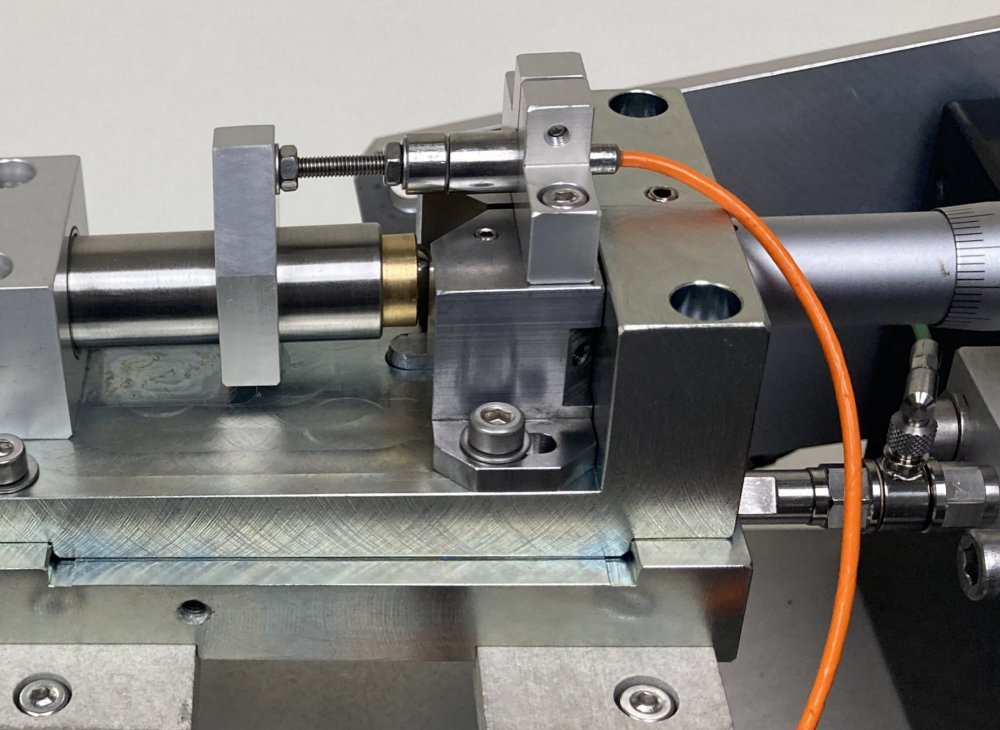
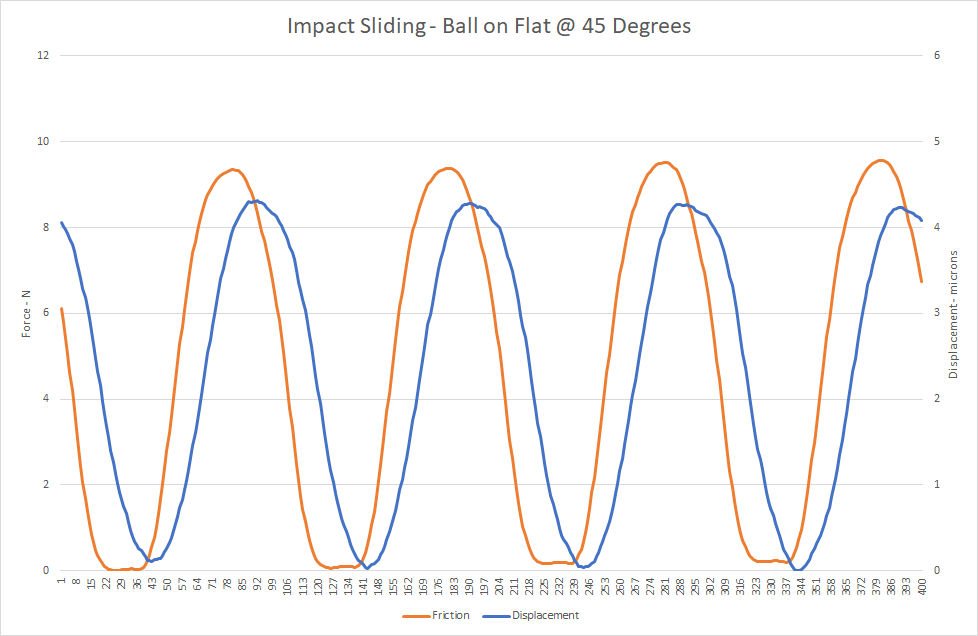
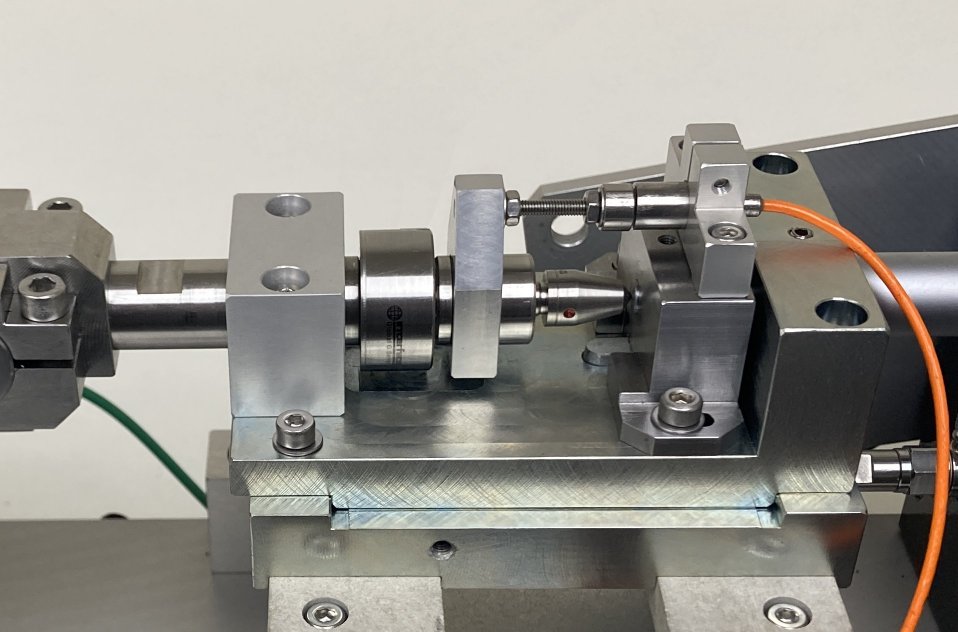
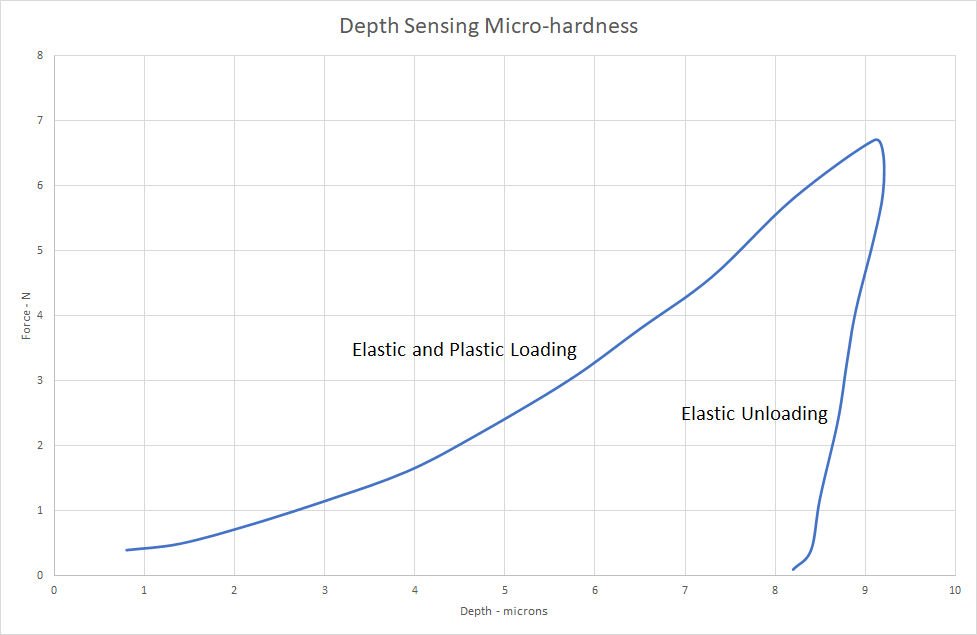
A servo pneumatically controlled loading system is provided for performing conventional parallel motion fretting tests. With the loading system disabled, the specimen orientation can be changed from parallel to perpendicular motion, allowing hertzian fretting, impact fretting and depth sensing micro-hardness tests to be performed. Specimen heating is provided for the parallel motion test configuration only.
Sensors include:
Piezo Transducer for:
• Friction Force
• Hertzian Fretting Load
• Impact Force
Strain Gauge Transducer for:
• Parallel Motion Load
Strain Gauge Transducer for:
• Hardness Indentation Force
Capacitance Probe for:
• Displacement MeasurementPiezo Actuators
Two choices of actuator are available. TE 44-100 uses a 100 micron stroke actuator, whereas TE 44-500 incorporates a much larger actuator, giving continuously adjustable stroke lengths up to 500 microns.
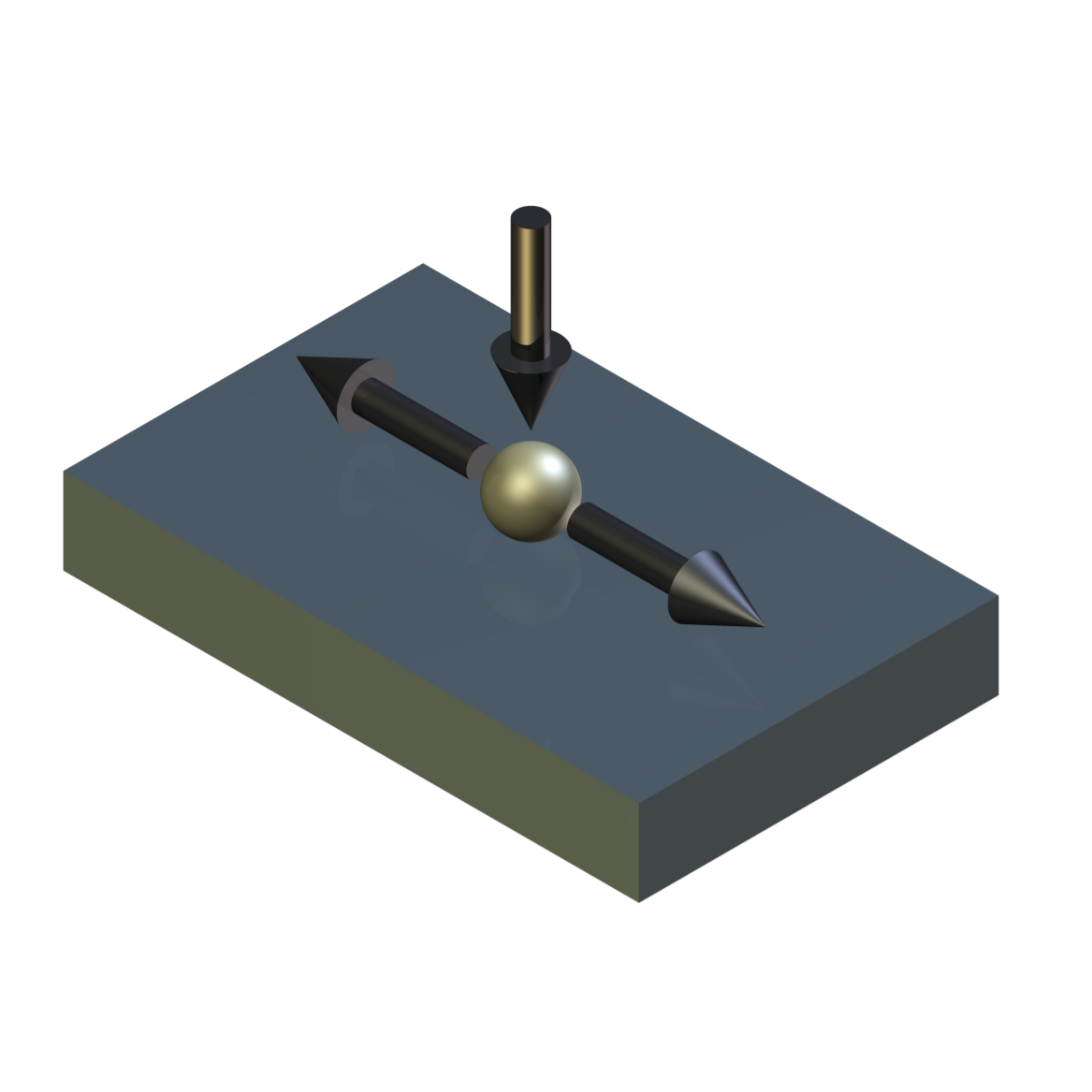
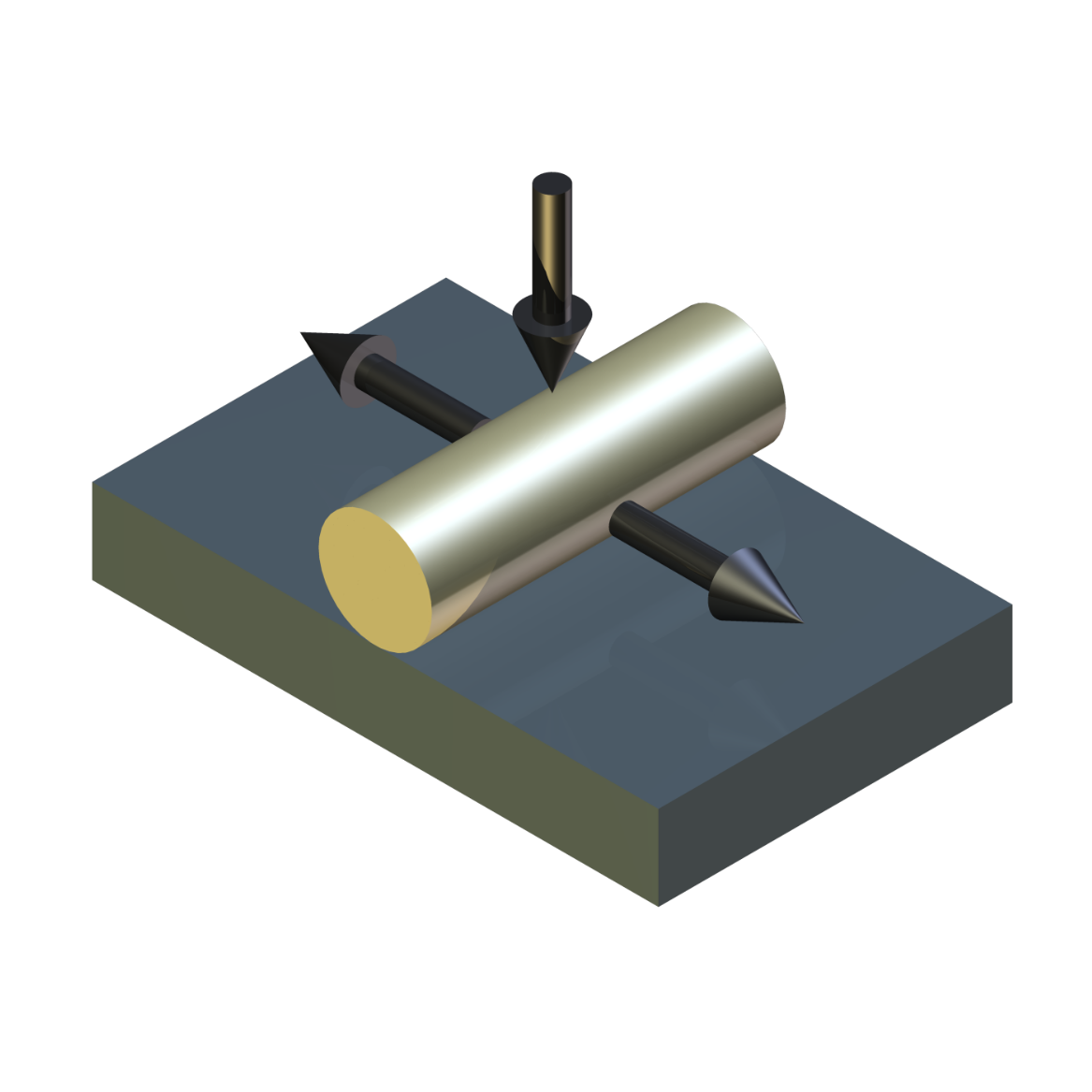
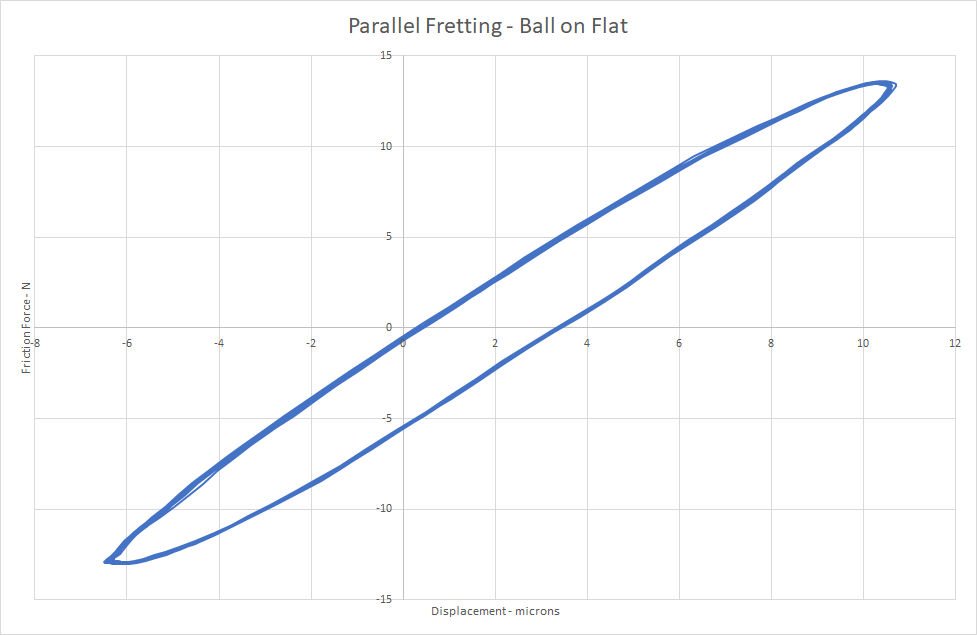
Parallel Motion Fretting
Hertzian Fretting
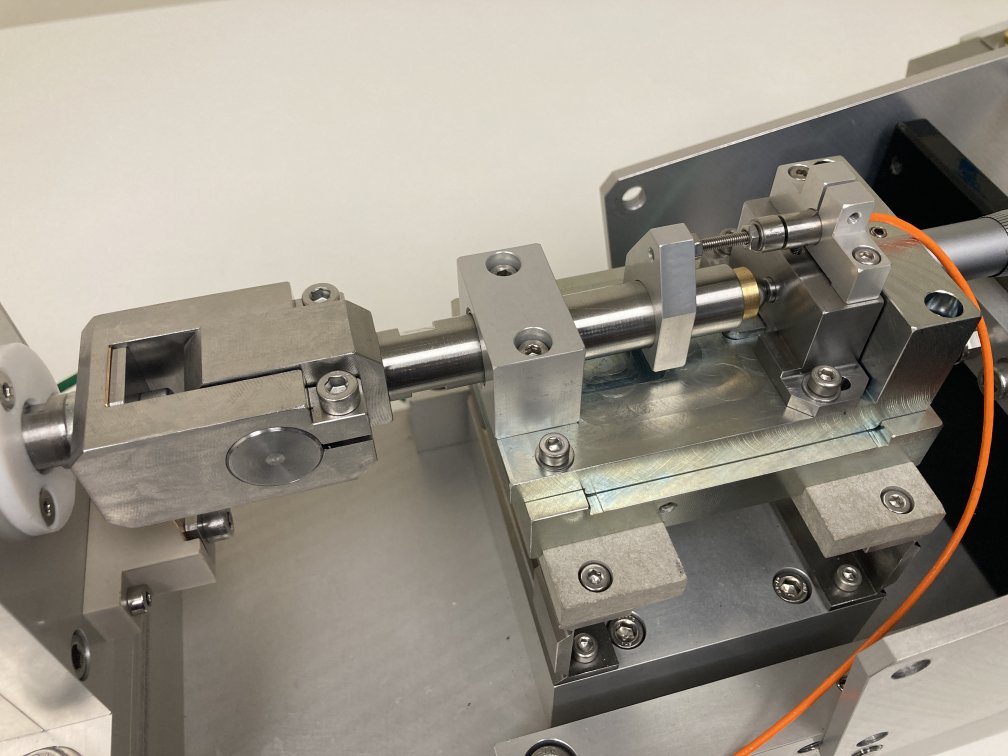
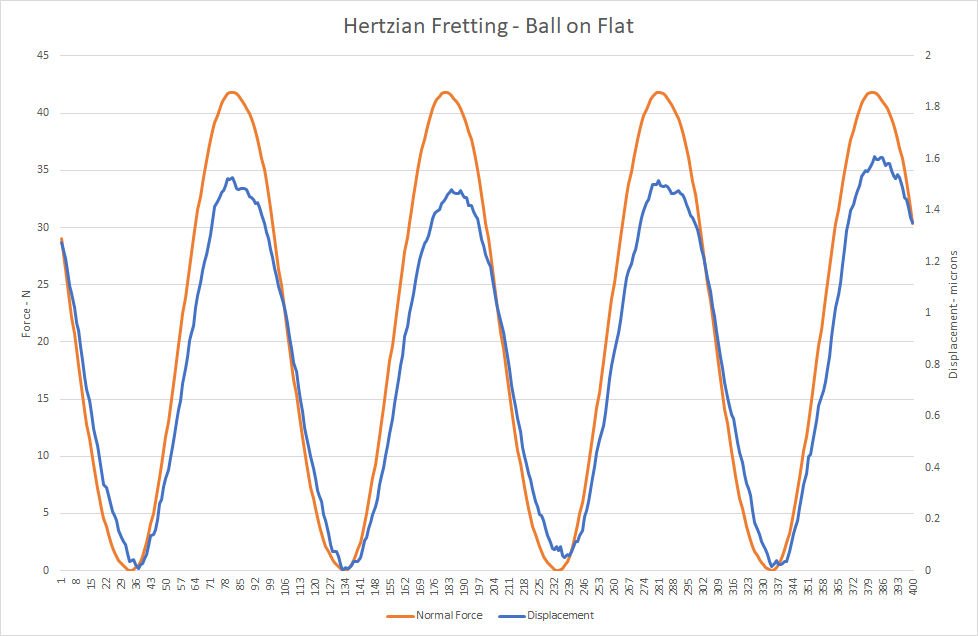
Impact Fretting
Depth Sensing Micro-hardness
TE 44-500 Extended Stroke Piezo Actuator
-
Technical Specifications
Type of Contact – Fretting/Sliding: Ball/Flat Flat/Flat Line/Flat Type of Movement: Sine, Square and Triangular Type of Contact – Impact Fretting: Ball/Flat @ 45 degree Impact Angle Type of Contact – Hertzian Fretting: Ball/Flat Type of Contact – Diamond Indenter: Depth Sensing Micro-hardness (Vickers) Displacement Control: Adaptive control of amplitude and mid-stoke position 5 to 1000 N Loading Rate: 50 N/s Temperature Range: Ambient to 200°C – Fretting/Sliding Only Heating Power: 200 W Temperature Sensor: k-type thermocouple Friction Force: +/-500 N Maximum Stroke Measurement: Capacitance Probe Full-scale Range: 0 to 1 mm Resolution: 0.2 µm High Speed Interface: USB Resolution: 16 bit Number of Input Channels: 6 Maximum Data Rate: Six channels at 50 kHz Low Speed Interface: USB Resolution: 12 bit Number of Input Channels: 1 to 8 Number of Output Channels: 1 to 4 Maximum Data Rate: 10Hz TE 44 – 100 Micron
Actuator: Piezocomposite Stack Maximum Stroke: 100 µm (50 µm Amplitude) Stiffness: 60 N/µm Resonant Frequency: 15 kHz Maximum Force: 12,000 N Maximum Tensile Force: 1,500 N Amplifier: 1000 volt Stroke – continuously variable: 0 to 100 microns Resolution: +/-0.2 microns Maximum Frequency: 500 Hz Minimum Frequency: 1 Hz Frequency Range: Continuously variable: 1 Hz to 100 Hz Maximum stroke at 100 Hz: 30 µm Maximum stroke at 50 Hz: 60 µm Maximum stroke at 20 Hz: 100 µm TE 44 – 500 Micron
Actuator: Piezocomposite Stack Maximum Stroke: 500µm (250 µm Amplitude) Stiffness: 60 N/µm Resonant Frequency: 1 kHz Maximum Force: 50,000 N Maximum Tensile Force: 6,000 N Amplifier: 1000 volt Stroke – continuously variable: 0 to 500 microns Resolution: +/-0.2 microns Maximum Frequency: 100 Hz Minimum Frequency: 1 Hz Frequency Range: Continuously variable: 1 Hz to 100 Hz Maximum stroke at 100 Hz: 50 µm Maximum stroke at 50 Hz: 100 µm Maximum stroke at 20 Hz: 250 µm Maximum stroke at 10 Hz: 500 µm Controlled Parameters
Frequency Waveform Stroke Mid-stroke Position Load Temperature Test Duration Measured Parameters
Frequency Stroke Displacement Load Friction Temperature Depth Sensing (Micro-hardness) -
Overview Videos
Machine Overview
-
Index Tags
ball on plate depth sensing micro-hardness hertzian fretting impact fretting parallel-motion-fretting research tribometers -

Call us on +44 (0) 1635 298279
Email : info@phoenix-tribology.com
Email : info@phoenix-tribology.com