
-
Description
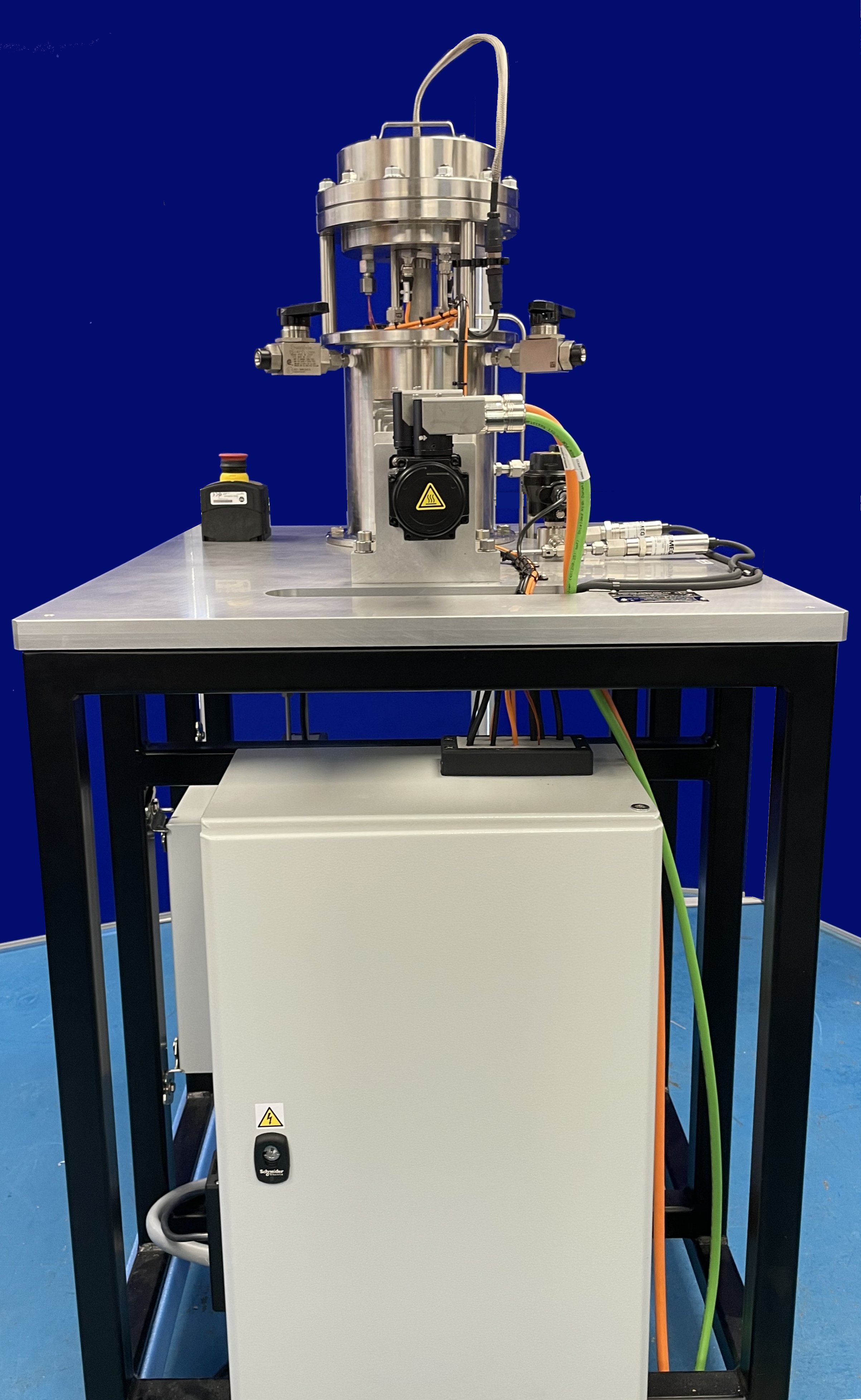
TE 60 is a three-station reciprocating tribometer, designed around a high-pressure chamber,
for experiments under hydrogen and other gases. It includes a vacuum pump for purging the
chamber before charging with a chosen gas, so can also be used for tests under medium
vacuum. Tests may be run with plate specimen temperatures from ambient to +150°C and
ambient to -50°C with an optional refrigerant probe and system.Test Chamber
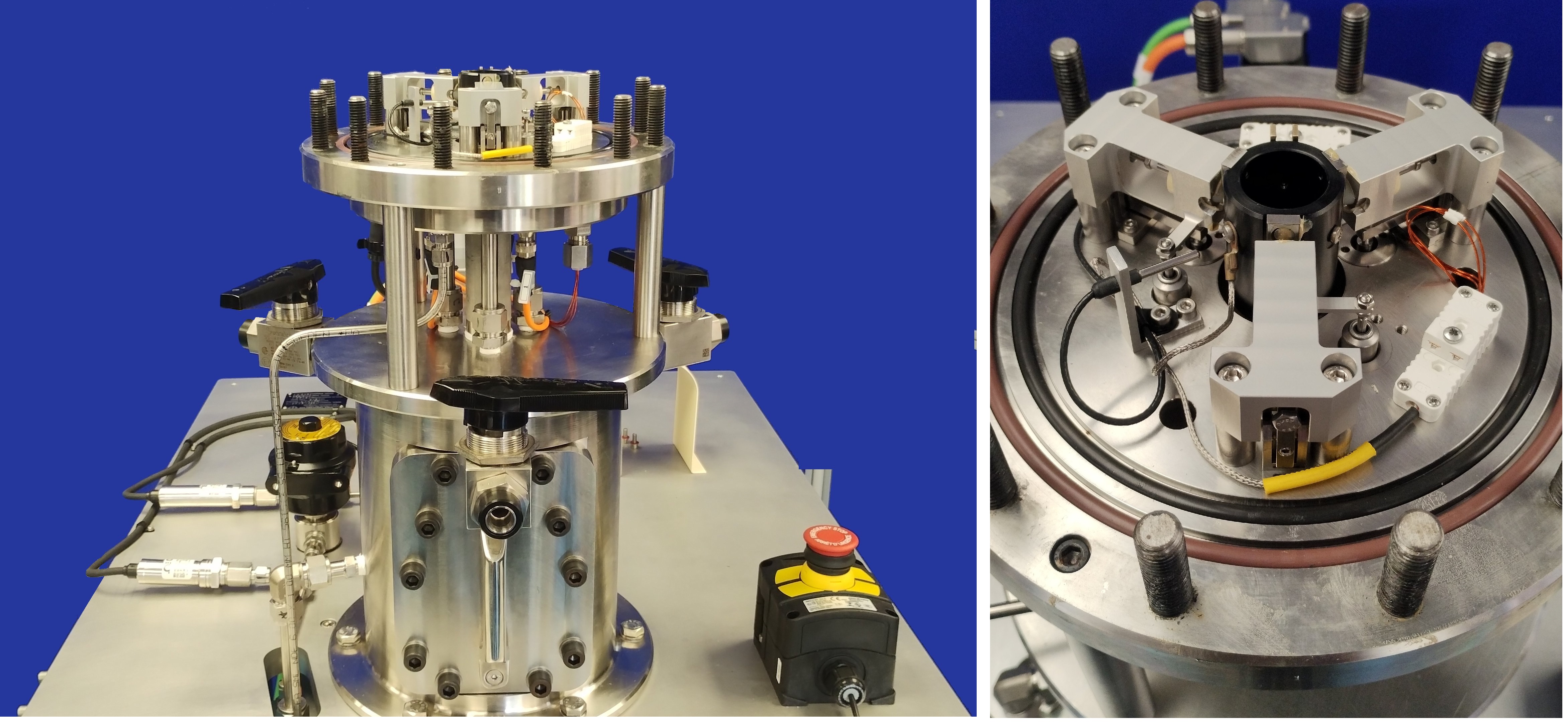
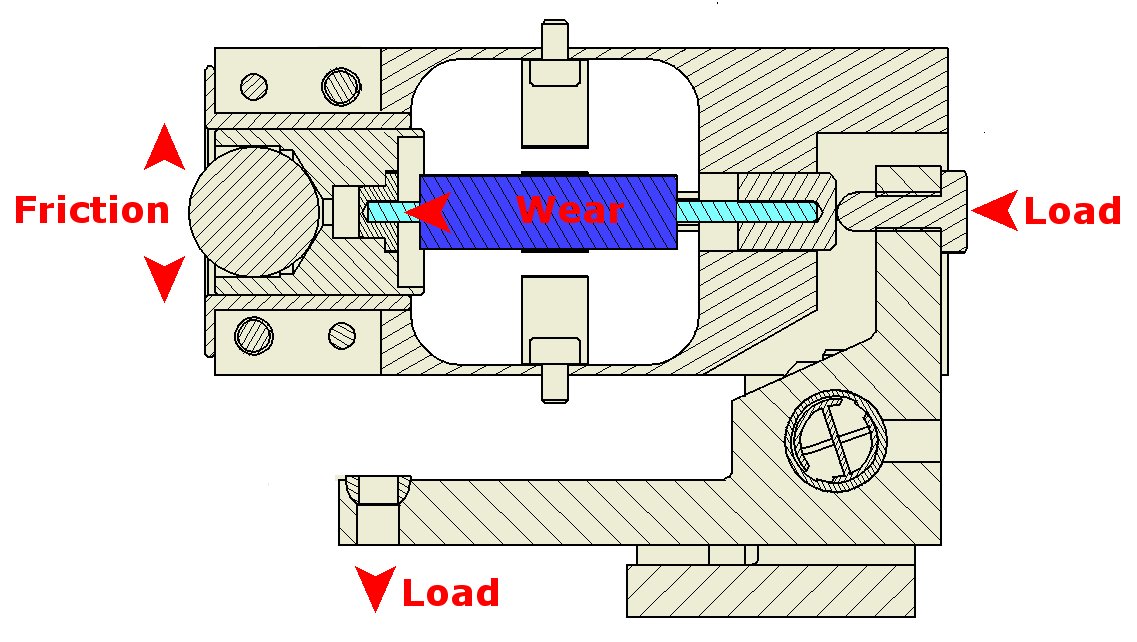
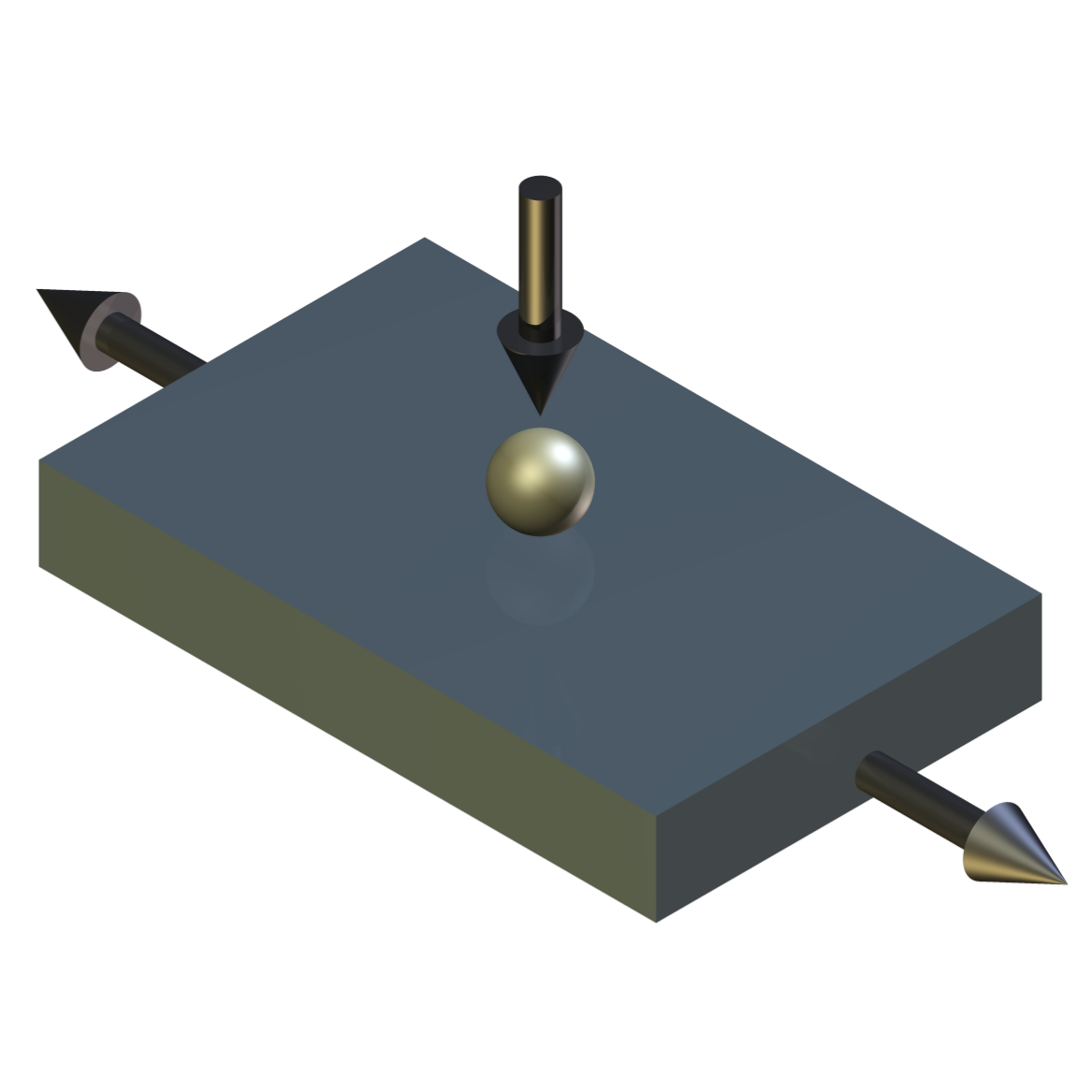
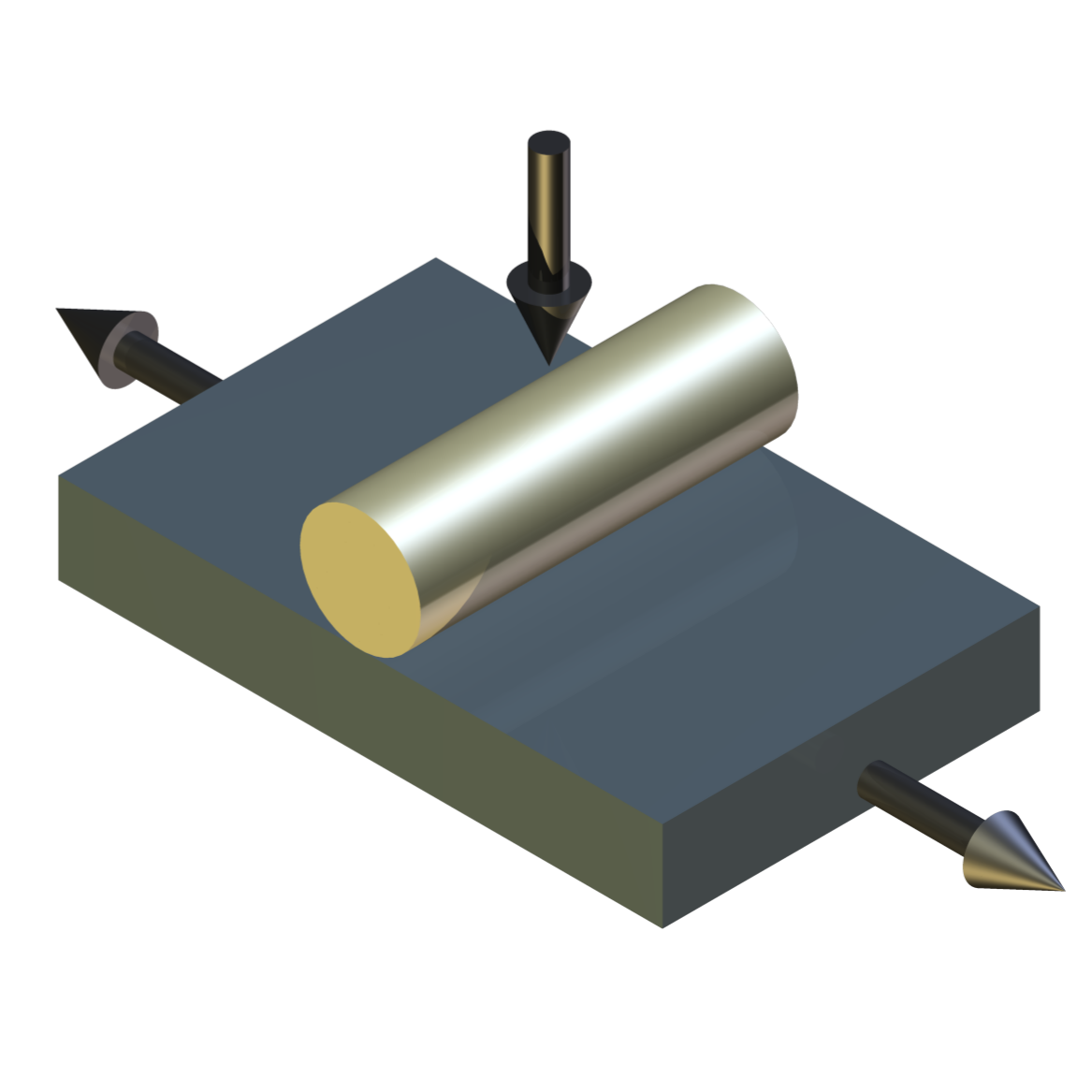
The test assembly, comprises three ball or line contact fixed specimen carrier assemblies,
mounted on the top of the pressure vessel. A reciprocating drive projects upwards between
the fixed specimen carriers and has locations for three plate specimens.
Friction is detected by measuring the deflection of cantilevered flexural beams using hydrogen
and pressure rated LVDTs. Wear displacement is measured by hybrid track linear
potentiometers mounted within the flexure loading assemblies.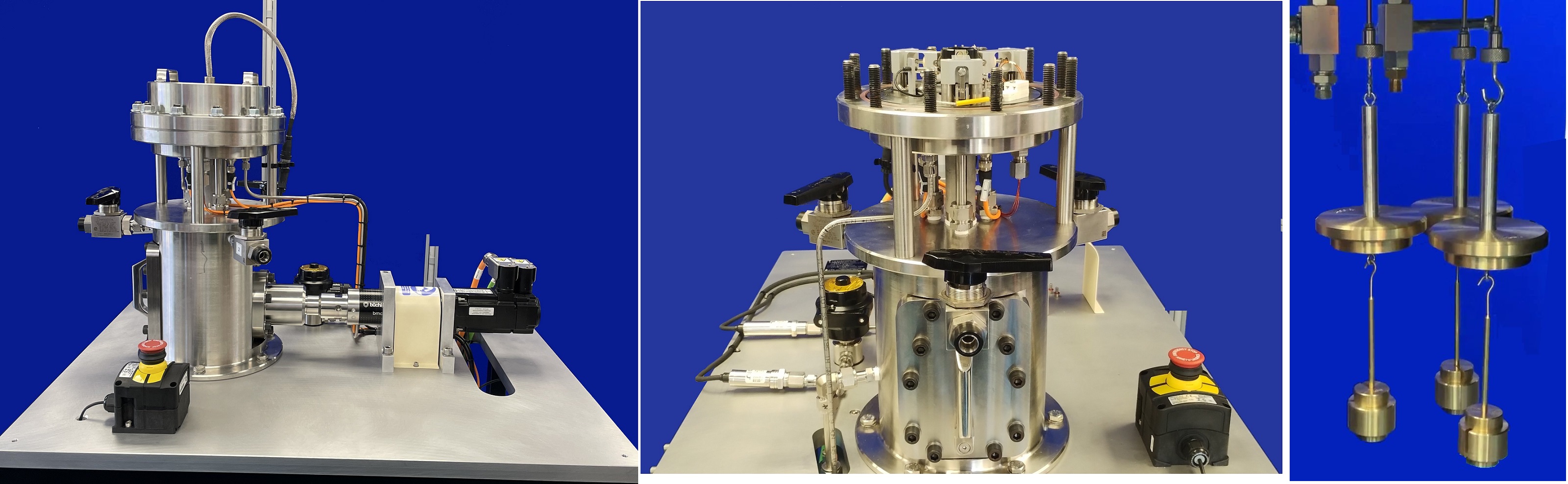
Lower Chamber
Reciprocating motion is generated by a manually adjusted, variable stroke, crank mechanism,
located in a lower chamber. This is driven by an externally mounted, ATex rated, geared servo
motor, via a magnetic coupling.
Load is applied by pre-tensioning load springs, located in tube between the two chambers,
with dead-weights. The extended springs are clamped, at the required pre-load, and the deadweights removed before the chamber is pressurised.Evacuating, Purging, Charging and Venting
The chamber is supplied fitted with the necessary ports and valves and pressure/vacuum
sensors to allow charging of the system. External gas handling and venting systems are not
included, but must be installed by the user, in accordance with local standards and safety
requirements.
It is recommended that all gas connections are hard plumbed in industry standard stainlesssteel tubing. It is essential that potentially explosive and asphyxiating gases are safely
discharged, outside the laboratory, in accordance with local safety regulations.
The normal procedure for charging is to start by evacuating the chamber, to remove as much
air as possible. The chamber is then purged, then pressurised, with nitrogen or inert gas. The
purge gas is then vented and evacuated. The chamber is then slowly charged with hydrogen
(or other test gas) and the specimens soaked for the required number of hours, before the
test is started. At the end of the test, hydrogen is slowly vented from the chamber, if
necessary, diluted with nitrogen or inert gas.Peripheral Systems
A cartridge heater and temperature controller are provided for heated tests and an optional
laboratory refrigeration unit with refrigerant probe for cooled tests.Control and Data Acquisition
Control and data acquisition facilities are provided by a PC in conjunction with a Serial Link
Interface Module, High Speed Data Acquisition Card and COMPEND control and data
acquisition software. -
Technical Specifications
Number of Test Stations: Three Test Configuration: Ball on Flat Cylinder on Flat Gases: Hydrogen, Argon, CO2 Working Pressure: 0.1 mbar to 100 bar Proof Pressure: 120 bar Stroke Range: 0 to 20 mm Continuously Adjustable Frequency: 0 to 5 Hz Motion: Sinusoidal Loading System: Tension Spring Load Range: 5 to 100 N Friction Range: 0 to 50 N Friction Deflection Sensor: LVDT Pressure Rating: 150 bar Wear Displacement: Hybrid Track Linear Potentiometer Heating Probe: Action: Contact cooling of plate specimen Temperature Range: Ambient to 150°C Electrical Feedthroughs: PT100 x 2 Rotary Feedthroughs: BMD-300 Magnetic Coupling Motor: NX-210 a.c. Servo Motor Optional Cooling System
Refrigerant Probe: Action: Contact cooling of plate specimen Temperature Range: Ambient to -50°C Automatically Controlled Parameters
Frequency Plate specimen temperature Test duration Manually Controlled Parameters
Load Stroke Chamber pressure (external service) Measured Parameters Friction Plate specimen temperature Chamber temperature Chamber pressure Number of cycles Derived Parameters
Friction coefficient Services
Electricity: 220/240V, single phase 50/60 Hz, 7.5 kW Process Gas System: Not included ATex Rating
The machine, drive motor and associated instrumentation are
ATex rated. The chiller unit, vacuum pump, power module and PC
control and data acquisition system are not ATex rated. It follows
that these items must be installed outside any ATex rated test
cell, with suitable ATex rated connections between the operator
work-station and the test cell. -
Overview Videos
Machine Overview
-
Index Tags
-
Download the Machine Leaflet